

"TOYOTA Social Hub": A Large-Scale SNS Operations Management System Built Through Prototyping-Driven Development
"TOYOTA Social Hub" is a web application that centralizes the operations of Toyota's official SNS, PR, and email newsletter channels, which involve multiple departments, an operations office, and approvers. It covers the full workflow from entry and material submission to test uploads, approval, post-publication checks, and performance measurement.
A small development team built the system through repeated prototyping, validating it against actual operational workflows. The goal was a UI that more than 200 stakeholders (as of August 21, 2026) could use without confusion, even with complex approval processes and platform-specific constraints.
Project Overview
Toyota Konic Pro Co., Ltd. serves as the project owner, and Liberogic was responsible for UI/UX design and system development.
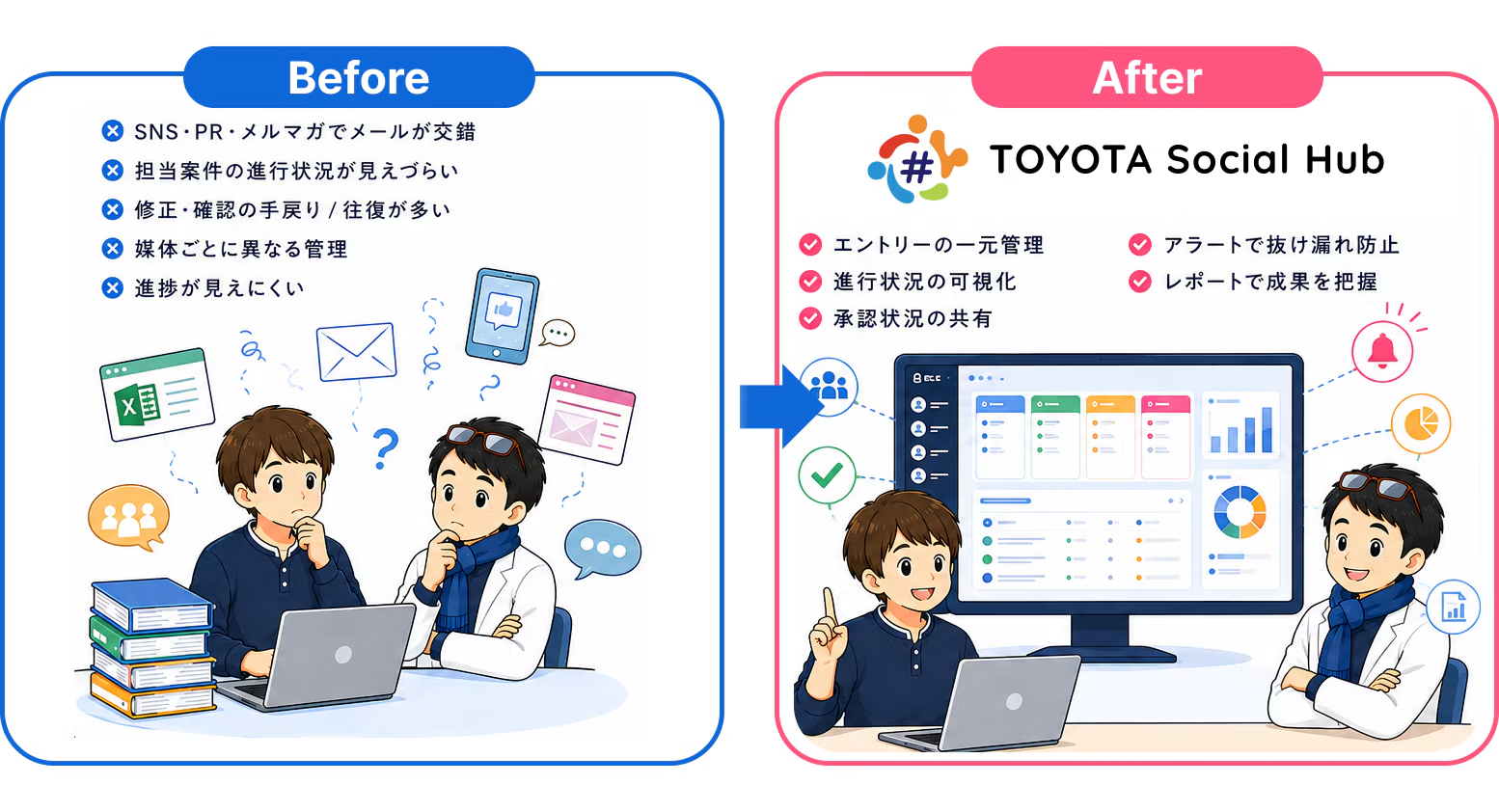
The system manages the complex workflows involved in posting within a single platform, including project entry, post scheduling, material submission, test uploads, multi-stage approvals, post-publication checks, and performance measurement and reporting.
Background and Challenges
Previously, posting requests, reviews, and approvals were handled separately for each SNS, PR, and email newsletter channel, using Excel, email, and verbal communication.
Email threads easily became tangled across multiple staff members, the operations office, and approvers, making it difficult to track the progress of assigned projects. Frequent back-and-forth for revisions and confirmations was also a challenge.
In addition, each SNS platform has its own rules for post formats, character limits, images, videos, and posting times. Simply recording information was not enough; a system was needed to accurately track platform-specific conditions and approval status. To meet this need, the team compared multiple implementation options, including using existing SaaS products and integrating with business management systems via API.
Modern Technology Stack
We use Next.js and Cloudflare Workers for the frontend, and Supabase for the backend, database, and authentication.
By combining managed services with serverless technologies, we kept the development and operations structure from growing unnecessarily large, making it easier to add features and adapt operations over time.
Prototype-Driven Development with a Small Team
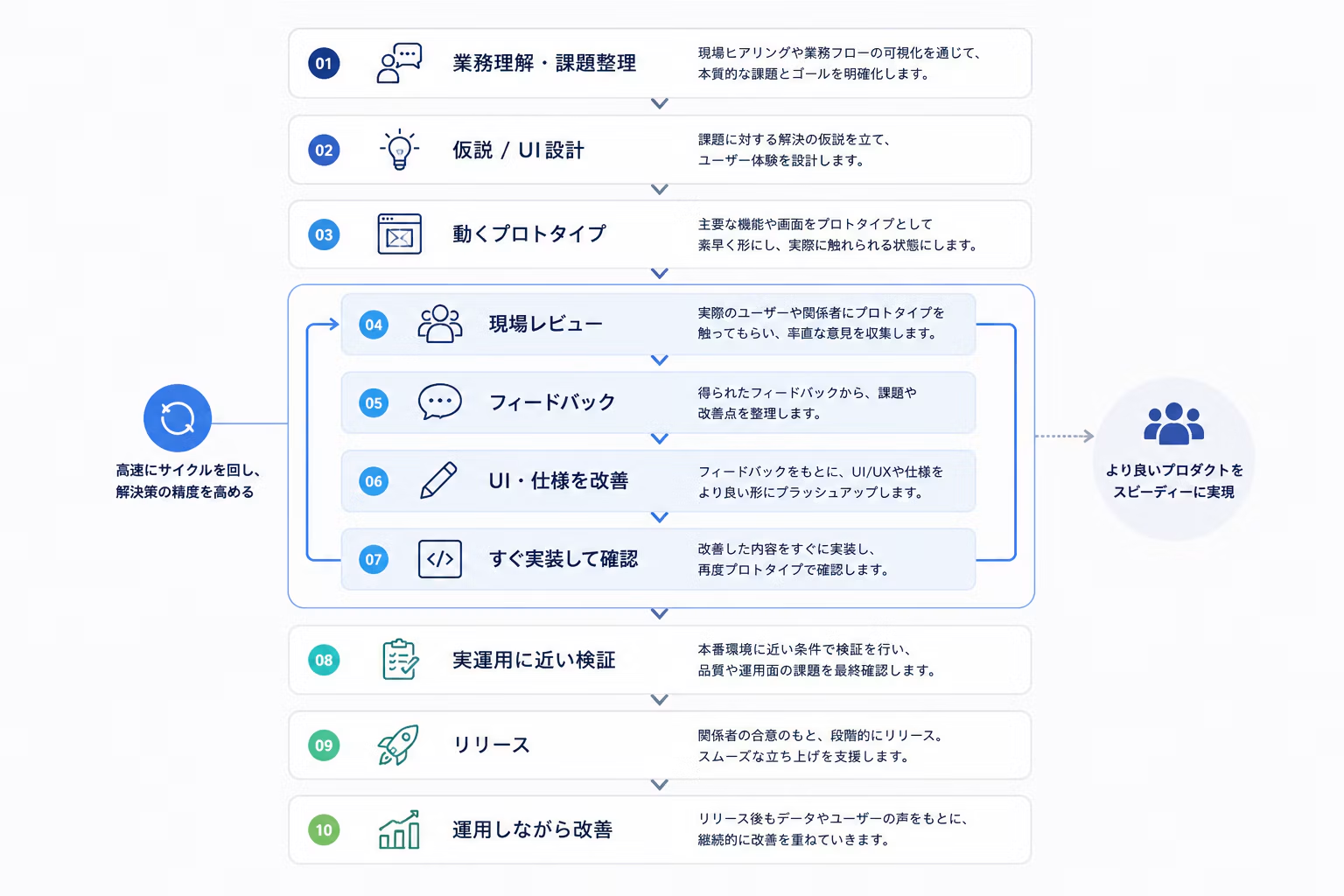
For business systems such as TSH, fixing all requirements upfront and then developing can produce screens and operations that do not fit actual use.
Instead, we chose an approach that organizes business workflows, turns screens into prototypes early, and advances development through repeated review and adjustment with stakeholders.
Rather than building a large development organization, a small team handled design, UI, and implementation together, keeping the cycle of decisions and improvements short.
Rather than simply recreating existing operations on screen,
- What case I need to handle now
- What task I should do next
- who is awaiting approval
- which channel's work has been completed
, and more, so users can grasp everything at a glance.
Managing multiple roles and channels in a single UI
TSH is used by people with different roles, including post requesters, external secretariats, operations secretariats, and editors-in-chief, all within the same system.
Each role requires different information and permissions, so we designed the system to switch the displayed content and available actions based on each user's role.
In addition, it supports managing multiple channels, including X, Facebook, Instagram, TikTok, LINE, PR, and email newsletters, while accommodating the specific input fields and constraints of each channel.
For each project,
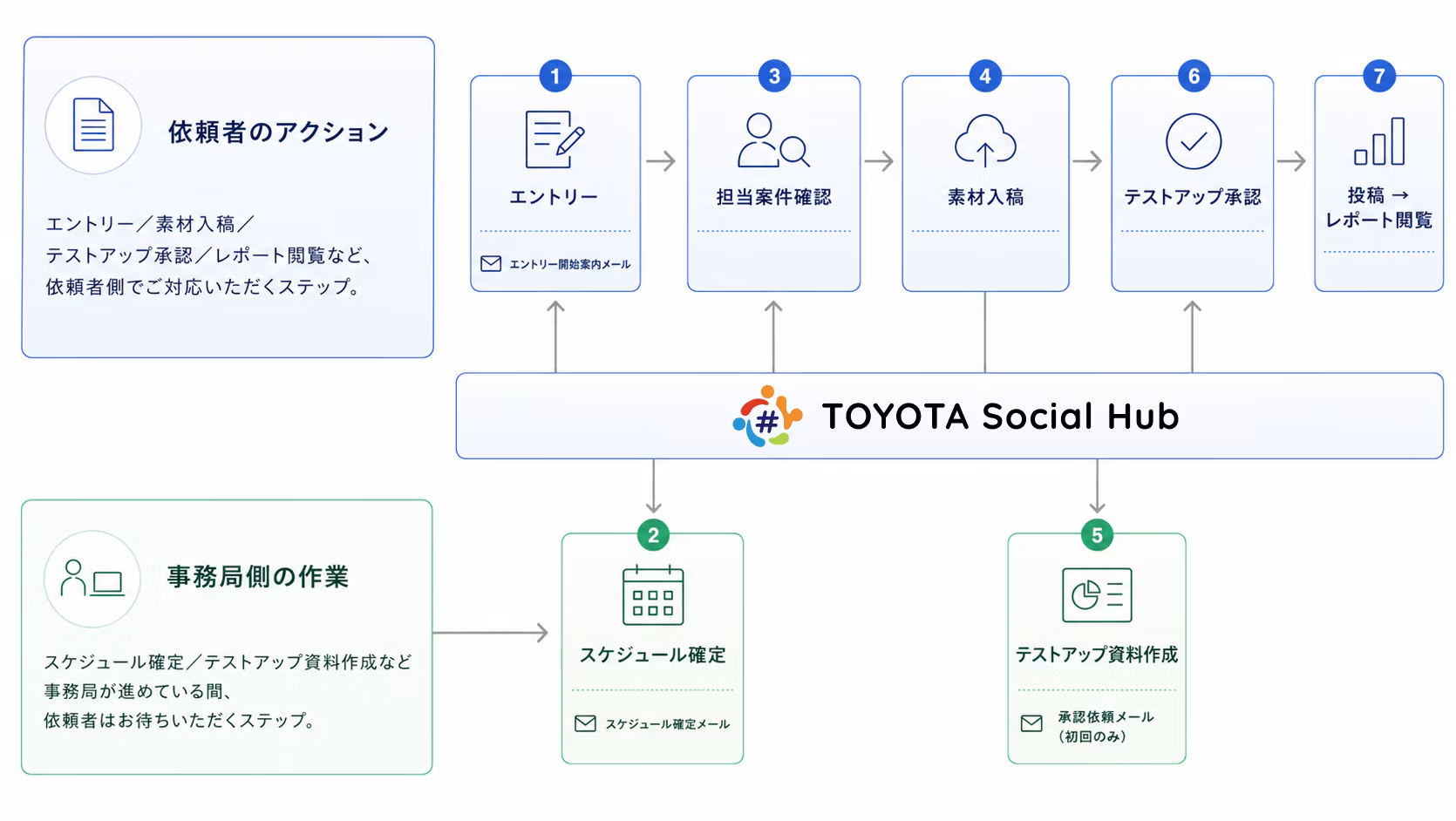
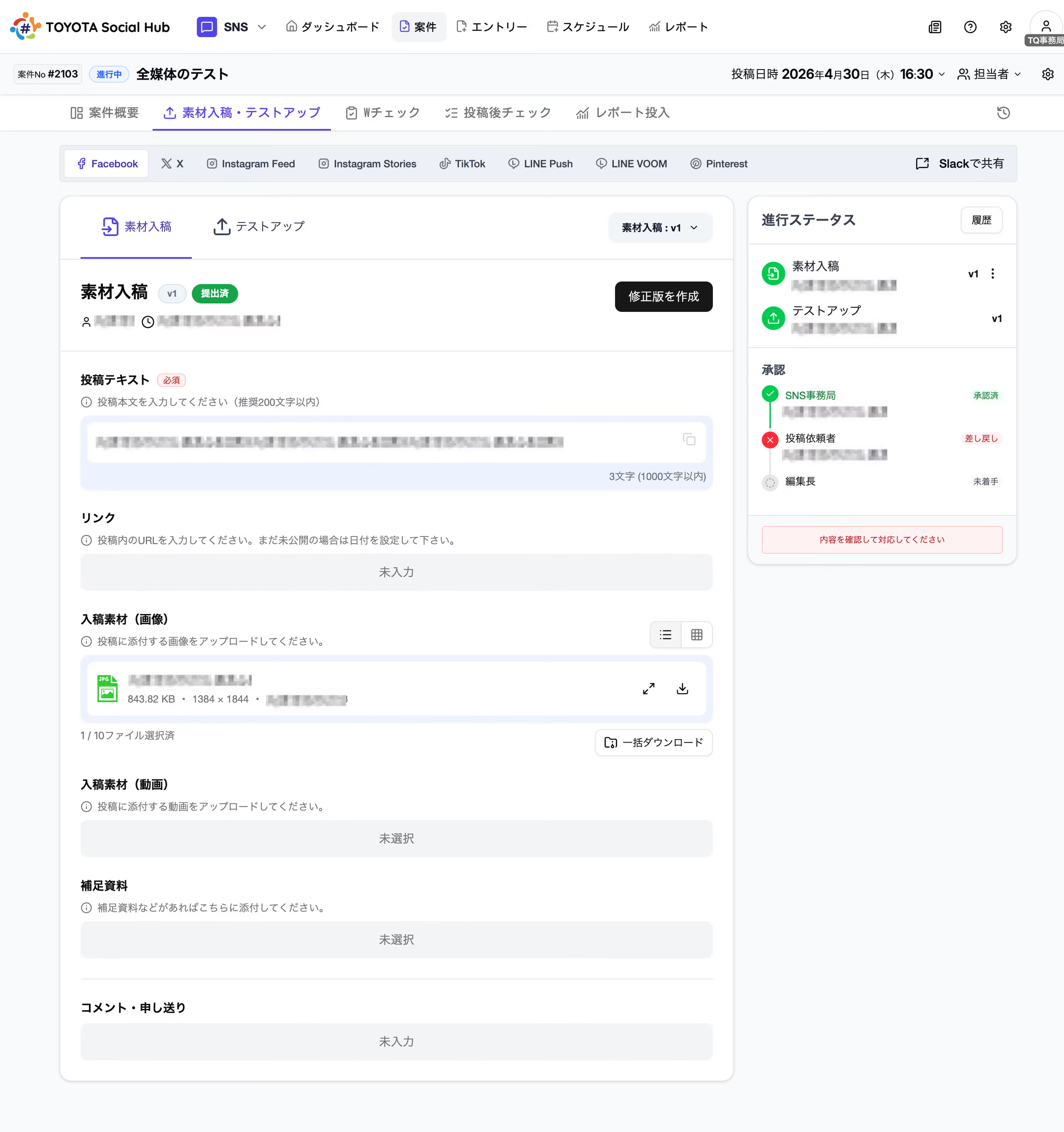
material submission → test upload → secretariat approval → post requester approval → editor-in-chief approval → double check → publishing → post-publish check → report submission
progress is visualized so that completed and incomplete work can be confirmed for each channel.
Flexible approval and asset replacement that fits on-site operations
One of TSH's key features is its approval flow using provisional assets.
Reviews and approvals can begin using provisional assets before the final materials are ready. Even after the final assets are swapped in, the approval status is preserved, allowing production and approval to proceed in parallel.
In typical workflow systems, replacing assets after approval can require a new round of approval. TSH was designed with the changes and replacements that occur in day-to-day social media operations in mind, featuring a structure that retains history and allows flexible updates.
Progress Visualization and Alerts
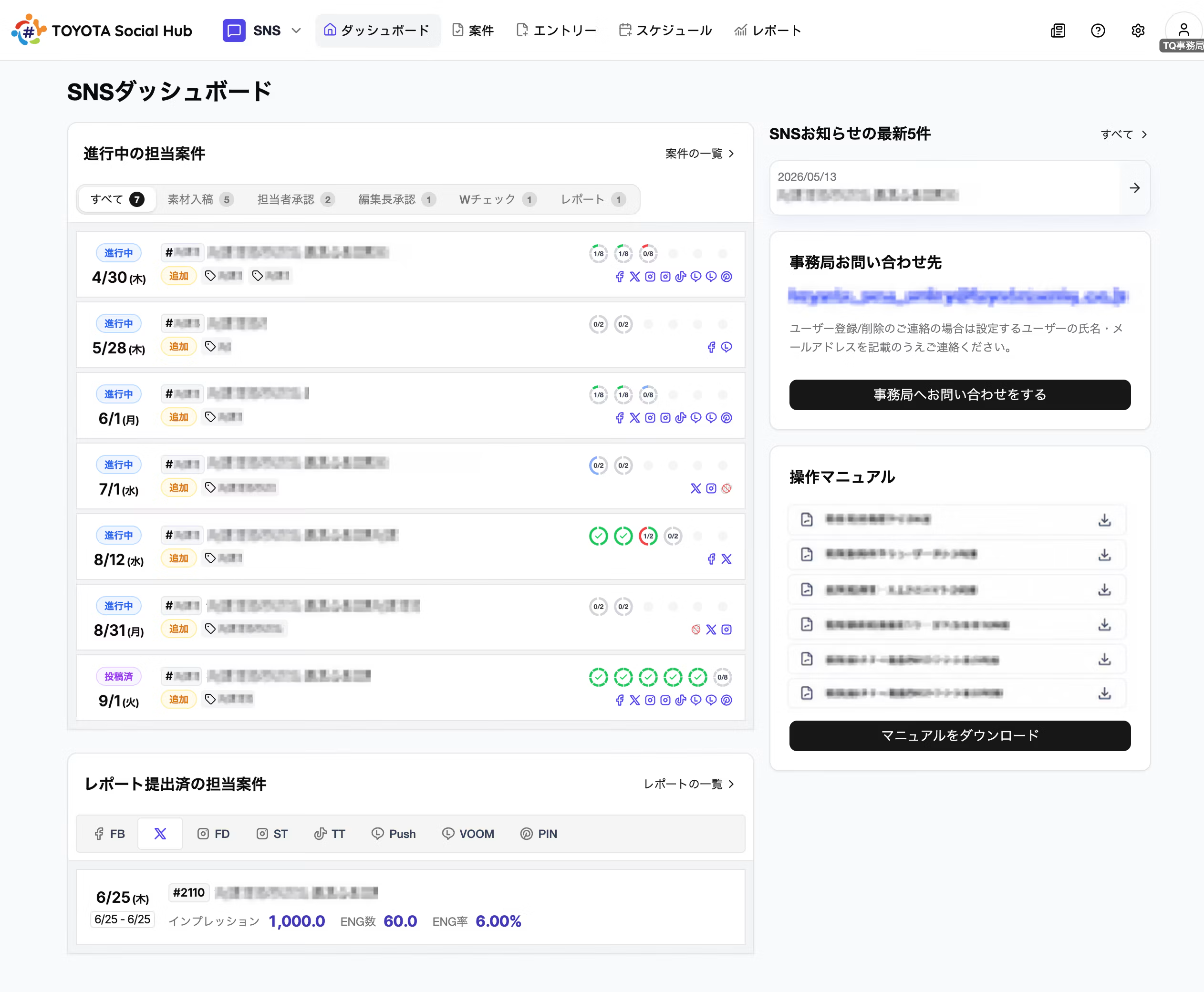
The dashboard and project detail screens display each project's progress by channel.
Each stage, including asset submission, test upload, approval, double-check, post-publication check, and report submission, is visualized so you can see at a glance how far along a project has progressed.
If input exceeds a channel's guidelines or if a required step is missed, notifications are sent via on-screen display and email.
As a result,
- Check the status of your assigned projects
- Preventing omissions in submissions and approvals
- Reducing rework from reviews and returns
- Reducing misalignment among stakeholders
supports.
Consolidating everything through post-publication performance measurement
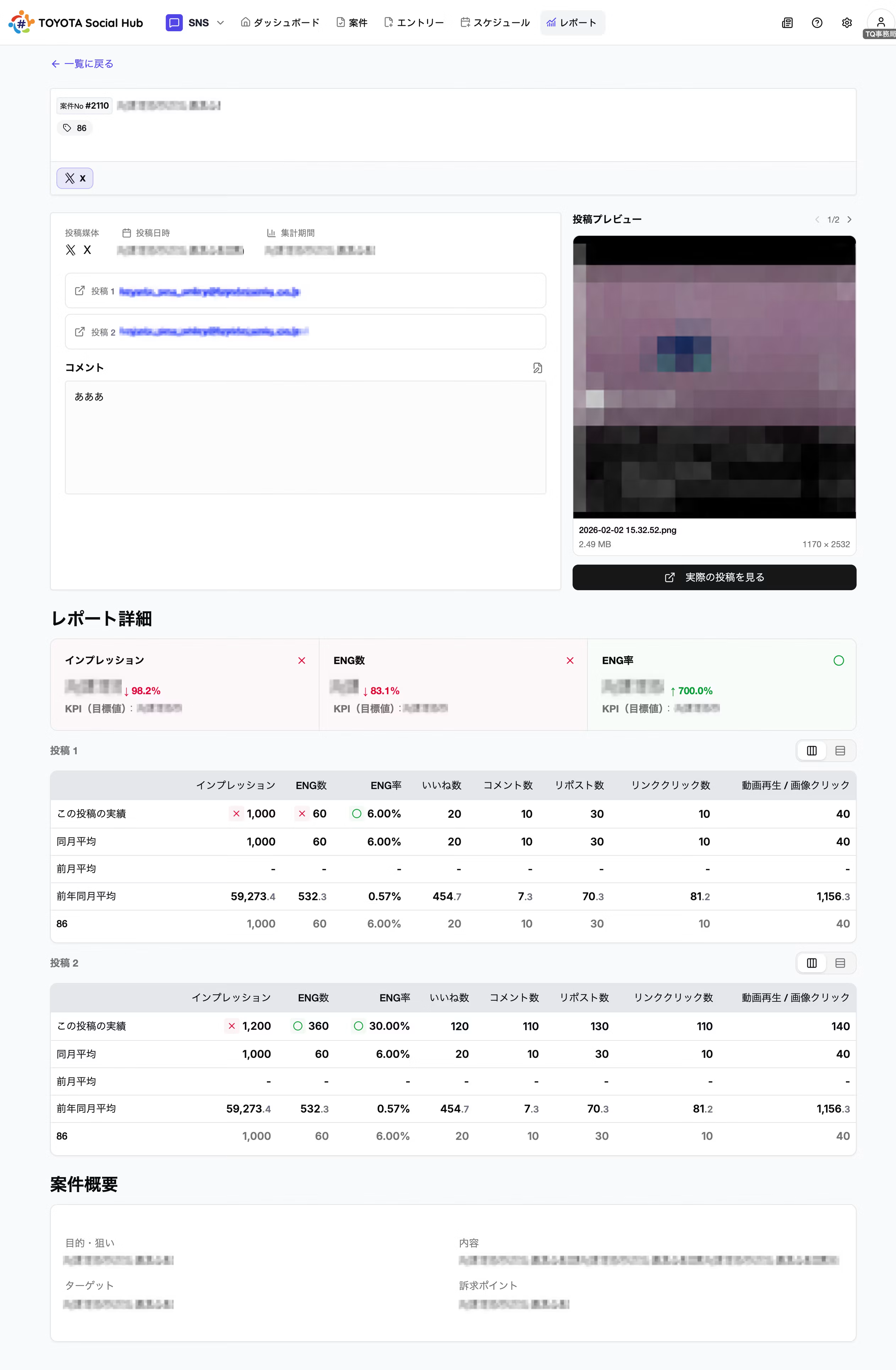
After posting, you can check delivery results for SNS, PR, and email newsletters side by side in TSH.
View reach, impressions, and engagement by SNS channel in both list and detail views. You can filter by project name, posting date, assignee, category, and more, and export data as CSV.
The report detail view displays post previews alongside performance results, so you can apply campaign outcomes to your next planning and posting decisions.
Results
Into an operations platform used by 200+ people
Since launch, the system has been used by more than 200 stakeholders (as of August 21, 2026), including multiple departments and operations office staff.
Users with different roles and responsibilities now share project progress within a single system, consolidating information and communication that were previously scattered across separate channels into one business system.
The screen structure, which follows actual operational workflows, and the UI, which makes assigned tasks easy to track, have also received positive feedback from operations staff.
We are grateful to the Toyota Konic Pro Co., Ltd. team, who led the project as a whole and actively shared feedback from the field and operational insights, which we incorporated into development throughout the process.
They also embraced advanced initiatives and new technologies and development methods, creating an environment where the development team could take on challenges flexibly. We believe this close collaboration and iterative trial and error have led to the current easy-to-use system and smooth operations.